A research study found that “patients spoke, uninterrupted, an average of 12 seconds after the resident entered the room.
One fourth of the time, residents interrupted patients before they finished speaking.
Residents averaged interrupting patients twice during a visit.”
–Rhoades DR, McFarland KF, Finch WH, Johnson AO. Speaking and interruptions during primary care office visits. Fam Med. 2001;33(7):528-532.
As a medical student on my second month of clinical rotations, I’ve found that it is crucial for healthcare professionals to take the time to truly listen to their patients. The patients know themselves best and when we take the time listen to their stories, it is our best chance at really making a difference in their lives. I found a quote from Rachel Remen, the Healer’s Art curriculum creator, that aligns with this.
Rachel Remen writes,
“the most basic and powerful way to connect to another person is to listen.
Just listen. Perhaps the most important thing we ever give each other is our attention…a loving silence often has far more power to heal and to connect than the most well-intentioned words”.
Two roads diverged in a yellow wood, And sorry I could not travel both And be one traveler, long I stood And looked down one as far as I could To where it bent in the undergrowth;
Then took the other, just as fair, And having perhaps the better claim, Because it was grassy and wanted wear; Though as for that the passing there Had worn them really about the same,
And both that morning equally lay In leaves, no step had trodden black. Oh, I kept the first for another day! Yet knowing how way leads on to way, I doubted if I should ever come back.
I shall be telling this with a sigh Somewhere ages and ages hence: Two roads diverged in a wood, and I— I took the one less traveled by, And that has made all the difference.
I grew up in a neighborhood where homelessness, drugs, and prostitution painted the backdrop to our daily lives. My elementary school lacked a science and history curriculum, pipe leaks streaked the walls, and our free lunches frequently had mold in them. Although I yearned for an education, nothing really seemed amiss to me at the time. My peers either lived similarly or were going through worse.
Back in our one bedroom apartment, I lived with my parents and brother. On my mother’s side, she grew up in China’s Cultural Revolution. On my father’s side, his family endured the horrors of the Khmer Rouge. As a child of immigrants, I saw my parents put every ounce of effort into providing the best possible life they could for my brother and me. We lived frugally and faced the unpredictable financial cycles of a small business, but I was never short of their unwavering care. Not once did they ever take a vacation for themselves. I’ve always considered myself living in abundance in this respect. Growing up, I imagined life’s happiness was one filled with stability and time well-spent with the people who meant most to me. Part of that is still true. However, I have stumbled upon other paths that also breathe purpose into me. And since some these endeavors go against the grain and pushes against certain structures of power, this is where my parents and I differ in opinion.
Perhaps many families of immigrants can relate to this particular lesson of “keep your head down and just work hard”. So when I shared my thoughts about issues such as racism, prison reform, or my decision to give up my administrative job for a case management position, I was always met with resistance. My parents warned me about hardship. That it’ll be a troublesome path. Dangerous, even. And for years, I wondered how they could live through what they did during their youth and not want better for others. I saw it as selfish. It wasn’t until stories were told and the gift of retrospect that I was lent, not a means of justification, but rather a deeper understanding for their outlook on life.
Imagine a youth, an impressionable time, marked by unimaginable strife. Imagine if any of your words that were even remotely critical of the governing authority, spoken at any timepoint in your life, could be used against you. Interrogations that turned children against parents, husband against wife, and neighbor against neighbor. Or if you dressed, spoke, or held a profession that goes against what the government envisions society to be – you and your family could lose your lives. And perhaps they would take out your entire lineage, too, because of the need to uproot “bad blood”. Steering the middle ground and never standing out just may be the closest thing to a guarantee for survival.
In my parents’ time and circumstance, fighting against injustice could have cost them more than just their lives. However, when I looked around I saw childhood friends come to school with bruises and scars, seen and unseen, trafficking occurring in broad daylight, and needles littering every corner block. It’s a very different time and my circumstances are much more fortunate, but in my world, it is the act of not speaking up or standing up for others that will cost lives.
The work and effort put into becoming a physician has both been exciting and challenging beyond what I imagined. This, all happening alongside the injustices that take place in this country every day, sometimes running like an unseen current, deep and disturbing. Those living through these injustices or fighting against it, it sometimes drives them into the ground for it is taxing and consuming. Many of us medical students are involved in a variety of causes and this can feel draining because we also need to meet the rigorous academic criteria in order to become full-fledged physicians. I cannot speak for anyone else than myself nor am I asking for anyone’s approval for how I build my own resilience. But reflection and perspective is where I draw my strength from when I don’t quite feel like I’m on solid ground. Seeing family survive what they did, I wonder how far my own limits go. When I sense fatigue and feel the need to step back, I realize that it is a privilege to do so. Many others do not have the luxury of choice to “take a break” from injustice because they are living it, in their past, present, and future.
Where my future paths and crossroads go, I don’t know. And personally, becoming a physician was never the end goal for me, if one even exists. Neither am I simply pursuing happiness, but I do know I seek a life of meaning and purpose. And not one that’s only for me, but also for many others, to relish in.
When observing masters of any craft, you notice that they do not waste any motion. Every movement is quick and precise. They often spend years improving their techniques, down to perfecting the last detail.
They realize that the road from average to master is paved with details. Step here. Cut here. Carve here. Heat for 12 minutes, not 10.
What this reminds me as a medical student is that, details matter. Small improvements, matter.
Over time, they can even snowball into big changes. As such, they deserve to be celebrated. This holds true for us as well as for our patients. Progress is progress. Incidentally, a major source of burnout is a feeling of inefficacy.
You are just not making the difference you thought you would.
As Andy Warhol put it,
“You need to let the little things that would ordinarily bore you suddenly thrill you.”
This quote reminds me that even minor changes deserve to be reveled in. Even small improvements are steps forward.
So stop, take a moment to celebrate the minor victories with your patients, appreciate what went into achieving that progress, and then keep moving forward, as a true master does.
With all of the uncertainty around the world during this pandemic, here is an entertaining video of an Oregon physician and his coworkers dancing together and spreading joy by uplifting each other during these unprecedented times.
Let us know what dance moves you pick up to shake off some of those quarantine blues!
Today we have a delightful story from Dr. Anil Harrison and an accompanying video of his incredible singing.
“I had a 107 year old patient and her daughter in her 80s who were English classical singers
The older lady asked if I sang ?
I said no, but I can bray !
One day after much pestering I gave in and attempted to sing a couple of songs for them…”
Below is Dr. Harrison’s video of him singing. In these stressful and uncertain times due to COVID-19, it is important to remember to relax when you can. There are so many healthcare workers who have posted themselves singing and dancing to lift spirits. If you have found yourself in a singing or dancing mood send us a video to share!
Submission by: Dr. Paul Mensah, FRCOG,Consultant Obstetrician & Gynecologist, NHS (UK)
We know how hard times are for everyone around the world during these uncertain pandemic times.
However, being on “lockdown” doesn’t mean we have to shut off our creativity and gratitude for the beauty in things around us.
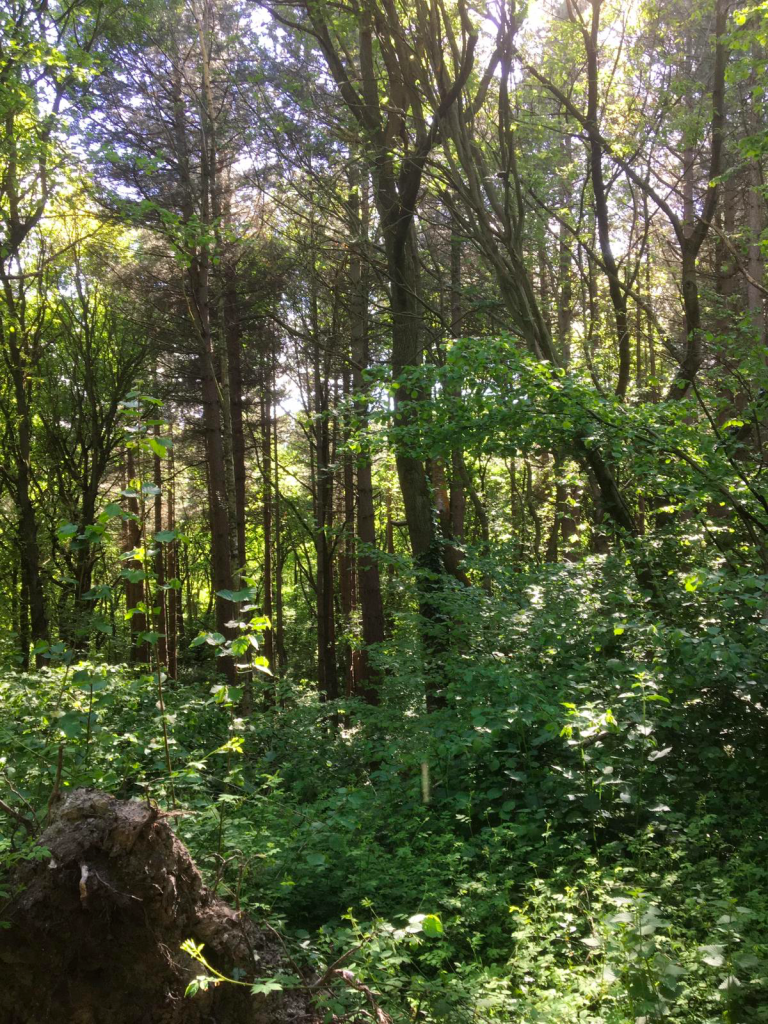
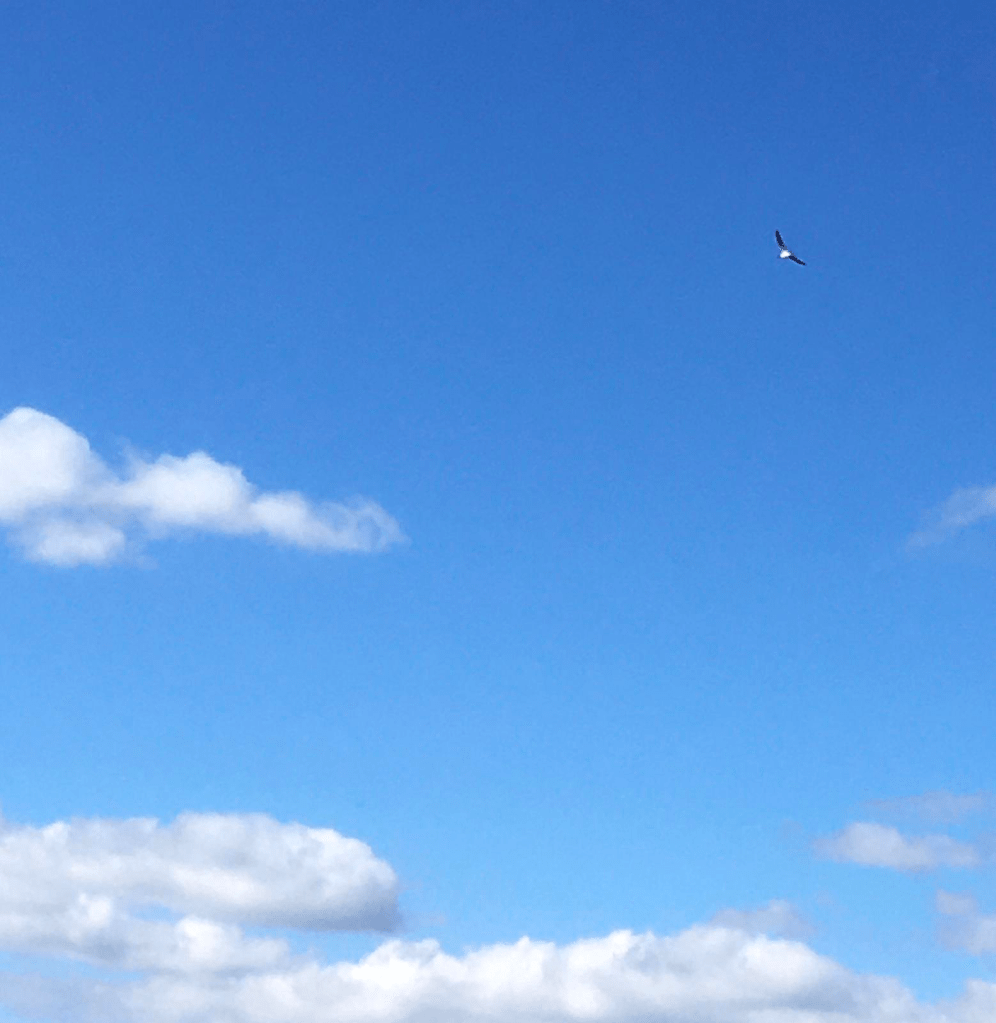
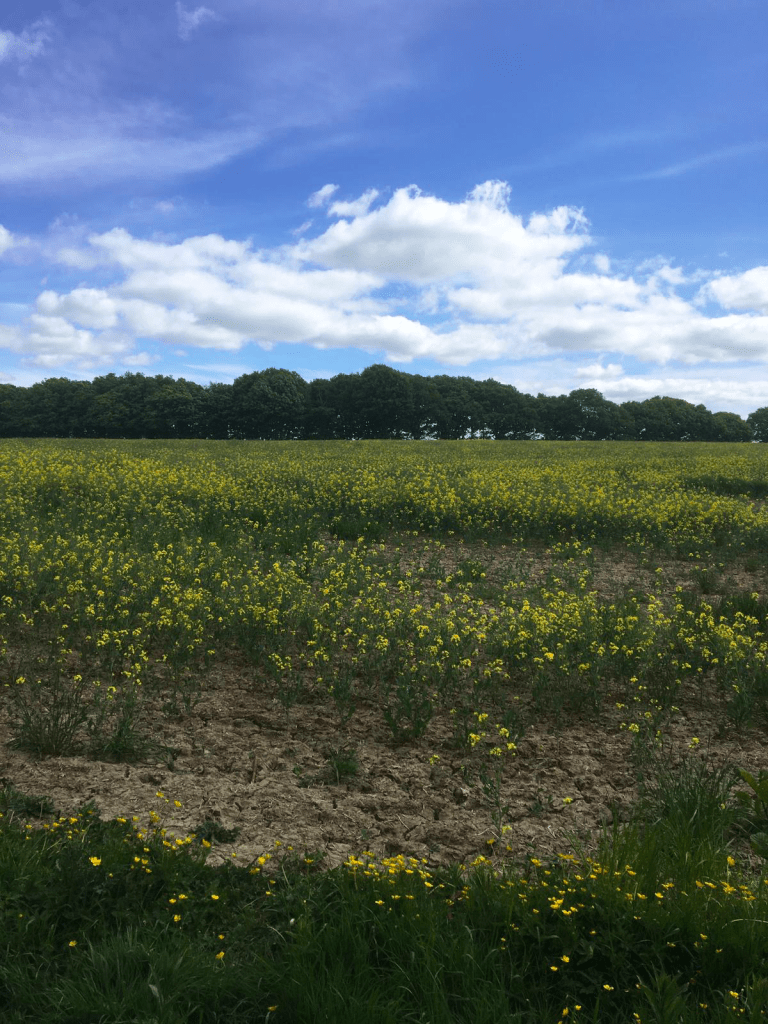
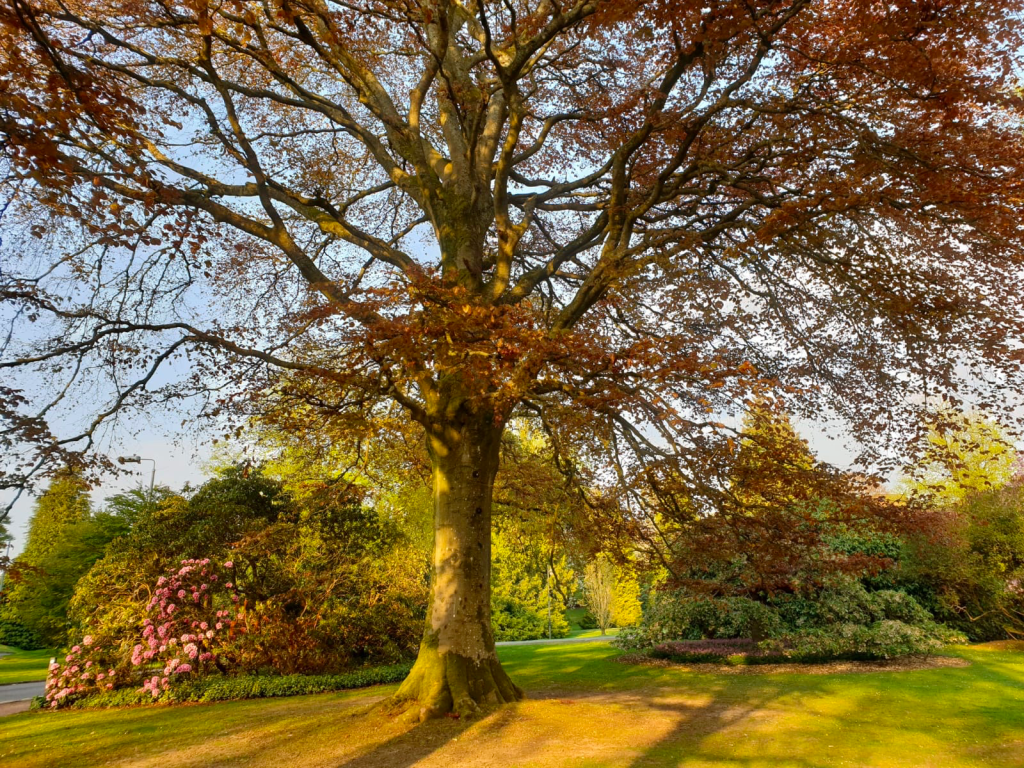
Below is an image and original poem reflecting on what we can see when we pause and appreciate what nature still has to offer us even in the era of social distancing.
Courtesy Image from Dr. Paul Mensah
A Walk Through The Crichton Gardens Of South West Scotland
by: Dr. Paul Mensah
I have walked these winding paths so often,
For relaxation,
For contemplation,
And to reflect on
The meaning of life.

And yet, and until now,
Have never sensed that
The beautiful creation all around me,
Speak so loudly, yet so soothingly.

The lockdown,
With no cars and humans zooming around the place,
Has allowed the melodious voices of an  array of birds,
To be heard;
The tones,
The crescendo and decrescendo,
The andante and cadenza,
The adagio and the accent,
Harmoniously  complementing each other,
With such orchestral precision.

With the warmth of the evening sun on my back,
I am stopping and staring as I go along.
No rush, for I am in
A Covid-19-induced lockdown mode.

Your glory, God,
Your mighty works abound.
In the blue skies above,
In the majestic trees Ahead and around  me,
In the kaleidoscope of the beautiful flowers all around,
their praise for you resounds.

Creation speaks without a voice or word;
And yet,
In these beautiful gardens ,
Its message can now be heard;
And it is so simple;
Peace, perfect peace.
Tranquility, perfect tranquility.
But only when I stop,
And only when I stand still
And only when I stare,
In loving admiration and awe.




 Daily Dose of Humanities